3 Things that Separate Christianity from Every Other Major World Religion
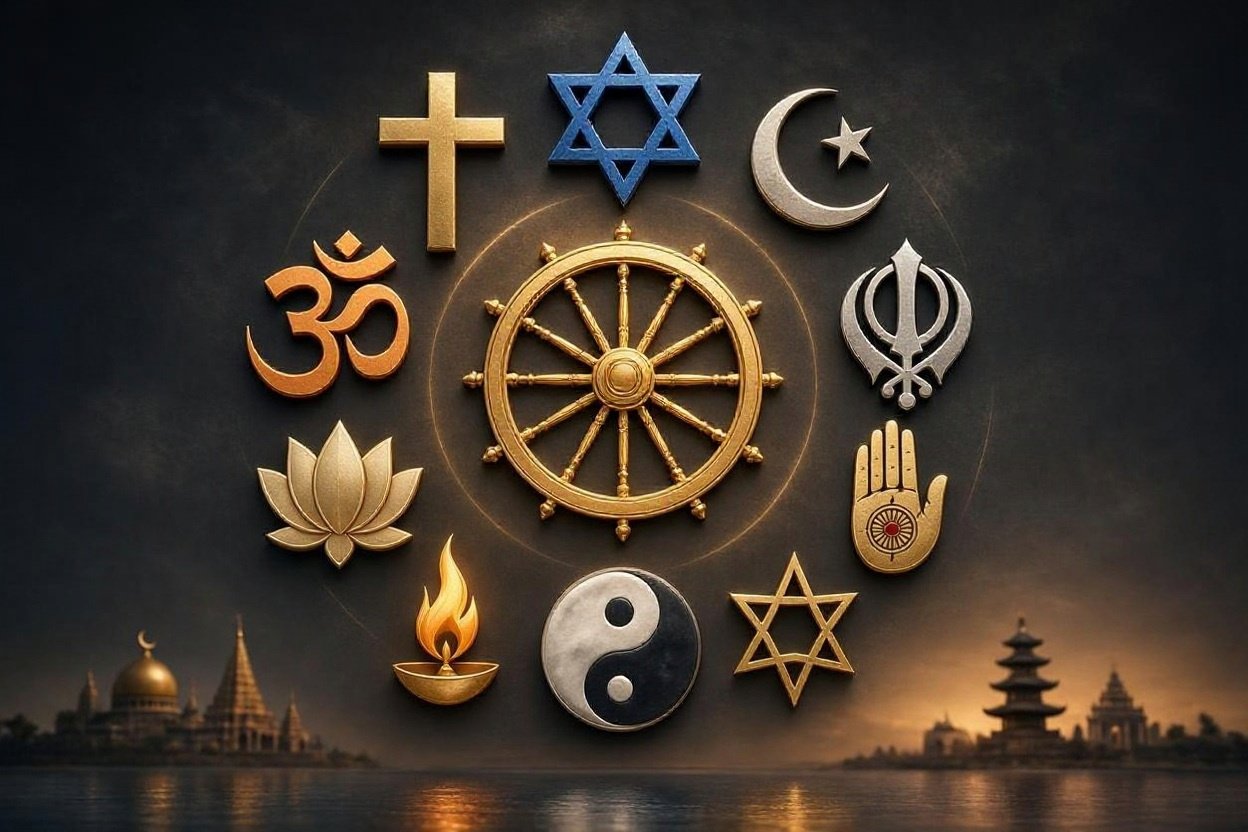
“All religions basically teach the same thing.” How many times have you heard this? If all you look at is moral and ethical codes, this is a pretty accurate assessment. However, the spiritual underpinnings about the nature of God, our destiny after this life, and ultimate truth are all over the place. Various faiths teach everything from fierce monotheism (Judaism, Christianity and Islam), to a pantheon of gods (Hinduism), to a vaguely defined and impersonal force (Buddhism and New Age teaching), to pantheism (where everything in creation is in some sense divine). Even though ethical teachings may be similar, these faiths certainly don’t agree on what God is like or how to relate to him. So, no. All religions don’t teach basically the same thing.
A well-known analogy promoted by those who stress various religions’ similarities is a mountain with several paths all leading to the top. Because, they say, all roads end up in the same place, it really doesn’t matter which path you take. But since the conflicting concepts of God are hopelessly irreconcilable, you clearly don’t end up with the same ultimate truth at the top.
Let me suggest three ways Christianity – as presented in the Bible – is unique.
1. It’s the only major world religion that stands or falls on an historical claim – one that can be examined and either supported or refuted. Christianity teaches that Jesus came back to life after dying for our sins. I don’t have room to discuss the evidence, but there is an entire universe of scholarship that supports Jesus’ physical resurrection. If you’re curious, a good place to start is Lee Strobel’s book (or the movie by the same name) The Case for Christ.
My point here is that every other religion includes important and worthwhile ethical teachings about how to live. But nothing in those religions requires believing in any historical facts. Buddhism doesn’t collapse if the Buddha didn’t exist. But biblical Christianity would if Jesus’ resurrection didn’t happen.
2. Christianity is the only major world religion whose founder claimed to be God. Buddha didn’t. Neither did Moses, Mohammed or Joseph Smith. As C.S. Lewis (the author of the Narnia books) observes, if Jesus declared himself God but wasn’t, he must be one of the following:
Totally insane
A wicked liar responsible for the persecution and martyrdom of millions over the centuries who believed his lie
In either case, he would certainly not be worthy of following. Lewis astutely concludes that the option of considering him merely a great moral teacher doesn’t exist.
3. It’s the only major world religion that guarantees acceptance by God. The central message of Christianity is that no one is born with a relationship with God, and we add to our alienation from God by our continuing sin. Since God is holy and just, he can’t just pretend we’re not sinful. A price must be paid for our sin. Doing so is beyond our ability. That’s where Jesus comes in. He lived a perfect life and willingly assumed the penalty we deserve. When we admit our separation from God, recognize Jesus as the only remedy, ask forgiveness of our sins, and turn over the reins of our lives to him, our standing before God becomes one of absolute acceptance despite out continuing imperfection.
What this means is that I can know that God completely embraces me – not because I am worthy or “good enough” but precisely because I recognize I’m not and understand where to go for forgiveness. Every other religion urges you to try your best to please or appease God (or the gods or “the universe”) through your righteous deeds and/or sacrifices. In the end, your good behavior may or may not outweigh the bad, so within those faith structures your fate remains unknown. But with Jesus you can be sure of God’s full embrace.
+++++++++++++++
Why do you think our culture promotes the idea that differences in religions don’t matter?
What would you say to someone who states that although Jesus was a great person and teacher, he wasn’t divine?
Has anyone ever accused you of being presumptuous for claiming that you can know that God accepts you? If so, what did you say in response?
. . . God has given us eternal life, and this life is in his Son. Whoever has the Son has life; whoever does not have the Son does not have life.
1 John 5:11-12