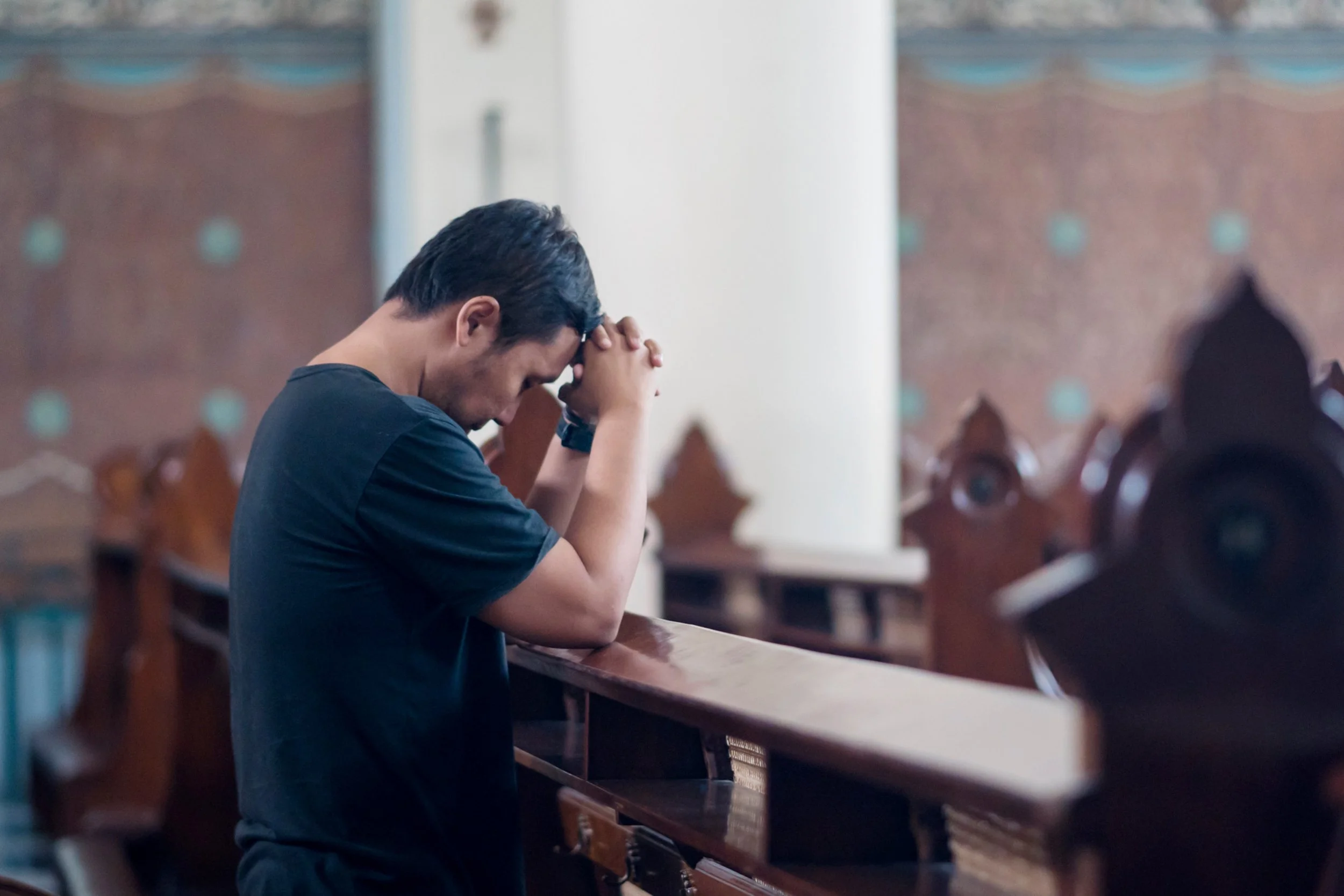
Are You a Superstitious Christian?

Godly habits like reading the Bible, praying, attending church, giving to further God’s kingdom, and telling others about Jesus are all important parts of growing in your faith. However, sometimes these can take on a life of their own and, if left unchecked, become unhealthy.

A few years ago, I was slated to deliver the morning sermon at our church. I felt good about my extensive preparation, but I wanted to make sure I was trusting God for its delivery. That Sunday morning as I was getting ready for church, I decided I should spend at least a few minutes reading the Bible. However, a big part of my motivation was to show God that I was a faithful, disciplined Christian, secretly hoping that this would increase the chances of my sermon going well. It was almost as much a “bribe” as it was an honest desire to spend time with God.

When I was in my 20s, I succumbed to the appeal of a persuasive television evangelist who encouraged his viewers to “plant a seed of faith and see what God will do in your life.” I liked the cause he was promoting, but I have to admit that part of my motivation for writing the check was to – possibly – pave the way for God’s blessing.

Both these examples demonstrate how we can drift towards trying to entice God with our good behavior. But how is this different from rubbing a rabbit’s foot to ensure good luck?

A superstition is an unreasonable belief that something I do or don’t do will result in a consequence I either want or wish to avoid. Superstition and magic are first cousins. In both cases, people are trying to impose their will by doing certain things. You can transfer this same attitude into your relationship with God and end up trying to manipulate him.

I’ve written before about a devastating job mismatch I had early in my career. The primary lesson I learned was that God didn’t owe me anything. My subconscious mindset had been that, since I had been such a “good Christian,” checked all the right boxes, and even “gave up” nine years of my life in fulltime Chrisitan service, God would reward me with great future career success.

God did ultimately bless my career through subsequent jobs, but first I had to learn that there’s no one-for-one relationship between my doing the right thing and God doing what I want. Some people assume God is punishing them if they experience difficult circumstances. But rather than being a sign of God’s displeasure, hard times are often part of God’s training and disciplinary process. Try convincing Job or the 12 apostles (almost all of whom were martyred) that they did anything wrong.

So I encourage you to avoid quasi-superstitious or quasi-magical behavior and to continue doing the things that honor God in every aspect of your life. He wants you to do the right thing simply because it’s the right thing rather than doing so in an attempt to put God in your debt. Can’t be done and it seldom ends well!

+++++++++++++++

  • Have you ever tried to “bribe” God into doing what you wanted? How did that turn out?

  • When you face difficult circumstances, is you default to assume God is punishing you?

  • Think of a time when you did something honorable just because it was the right thing to do. How did that make you feel?


May the words of my mouth and the meditation of my heart

Be acceptable in your sight, O Lord, my rock and my redeemer – Psalm 19:14

Would You Buy a Cappuccino from this Coffee Shop?

Of the eight restaurants in Wrightwood, only three serve breakfast. And two of the three don’t open until 8:00. That means the only option for meeting with people who must get to work early is the lone coffee shop that opens at 6:00 a.m.

Because the owner is vocal about his political views and social positions – sporting banners and T shirts that go counter to common Christian views – some churchgoers won’t eat there. A few times, I’ve suggested to someone this as a place to meet, but he balked because of the social messaging. I get it. Ours is a free-speech, free-choice country. The owner is free to speak his mind. And customers are free to go there or not.

But there’s something else to consider. With only about five tables inside and six or eight outside, it’s a cozy environment where you often overhear other people’s conversations.  When I’m meeting with guys to discuss God’s grace and how great it is to follow Jesus, I know it’s likely that other people hear what we’re saying. I consciously avoid appearing judgmental by criticizing any groups, and instead of using “church speak” terms like “Hallelujah,” or “washed in the blood of the lamb,” I explain whatever concept we’re discussing in terms a non-Christian could relate to.

Just last week, I met with a guy who was on the brink of committing his life to Christ. I explained in very simple terms how to become a Christian, and I know the man sitting by himself at the next table overheard our conversation. Of course, I have no idea what he thought, but at least he heard a clear and positive message.

One cool thing about Wrightwood is that each April and May, we get hundreds of hikers traveling the Pacific Crest Trail (PCT) which runs right by our town. Not long ago as I was enjoying a guava turnover at one of the indoor tables, I got into a conversation with a friendly hiker. We had a great discussion about hiking, how cool the PCT is, why Wrightwood is a great place to live, etc. And although I didn’t go through a complete explanation of how to become a Christian, I was able to present a positive view of the faith. I hope I gave him something to think about as he spent the next few weeks on his solitary trek.

I get that some Christians avoid this place on principle. But I’m reminded of how the religious leaders of Jesus’ day chastised him for mixing with sinners and tax collectors. But just because he ate with them doesn’t mean he endorsed their lifestyles. And just because I meet with people in a place that shows few signs of following Christ, it doesn’t mean I agree with all their views. The Letter to Diognetus – a second-century apologetics letter – urges Christians to “be in the world, but not of the world.” I can’t think of a better place to have grace-filled spiritual conversations than the heart of a thoroughly secular environment where “the walls have ears.” This includes both customers and staff.

Clearly, businesses like porn shops and places that sell drug paraphernalia should be avoided unless God specifically leads you to bring the gospel there, but a small-town restaurant can be a fertile ground for significant ministry, even if you don’t subscribe to all its views.

++++++++++++

  • To what extent are you uncomfortable frequenting businesses that express views you disagree with? Where would you draw the line?

  • Is it wrong to buy from a place that supports views you reject? Have you thought through the fact that any product or service you buy could very well have ties – either through corporate ownership, funding from various mutual funds, or charities they support – to organizations you don’t like?

  • How well can you explain the gospel in terms someone with zero spiritual background can understand?

“It is not those who are well who need a doctor, but those who are sick. I didn’t come to call the righteous but sinners.”

(Jesus in Matthew 2:17)

Three Ways to Change – Which Is Best?

“Tom, you are Christian now. You need to stop drinking, smoking pot and smoking cigarettes.” That’s what a well-meaning person told my good friend Tom Jeannett a few weeks after Tom came to faith in Christ. Confused, Tom went to Jim, the guy who had initially shared the gospel with him, and said, “I thought you told me it was a free gift, and now this guy is telling me what I can and can’t do. That’s pretty much what I came out of. If this is what it means to be a Christian, I’m not sure I’m interested.”

Wisely, Jim said, “Tom, you have a personal relationship with the Lord now. Why don’t you just talk to him about this and ask him to show you if it’s something he wants you to change.” Tom thought that was reasonable, so he agreed to that plan. Here’s how he describes the results:

After seven months, God brought me to the point of seeing that continuing to do all those things after experiencing the blessing of having a growing, personal relationship with Jesus was like settling for hamburger when the Lord was offering filet mignon. On May 2 of that year, I quit drugs and cigarettes and getting drunk.

And he never looked back. I have known Tom for many years, and the transformation in his life is astounding. He is one of the most godly and pure-hearted people I know.

The original advice Tom got reflects the “admonition method” where someone (correctly) points to a biblical standard and urges the other person to change their behavior. There is certainly a place for that, and we should never ignore the Bible’s behavioral expectations.

A second approach is where a person decides on their own to change their habits through discipline and determination. I’m all for intentional self-improvement, and we should pursue this as well. 

Please understand, I am not dismissing either of these approaches. You should always be open to heeding instructions from others or entering a discipline that improves your life. However, the most profound changes occur when God burns a new conviction into your heart.

One event from my early days as a Christian parallels Tom’s experience. I trusted Christ my second year of college. Before that point, my language frequently included words – many of which had four letters – that you never hear from the pulpit on Sunday mornings. I also referenced Jesus frequently, but not in prayer – if you know what I mean.


One day about a year into my Christian life, I was having a friendly argument with a guy from my dorm floor. I headed toward the elevator to go to dinner and he said something stupid. As I stepped into the empty elevator, I turned around to respond and yelled out, “What in the world are you talking about?!? Jesus Christ!!”

At that moment, as the elevator doors closed, the Holy Spirit pierced my heart, showing me that my use of Jesus’ name like that was totally inappropriate and instantly become repulsive. And I never, ever, ever did that again.

So, there are three ways to pursue change:

  • Respond to someone’s admonitions

  • Embark on a self-improvement plan

  • Ask God to reveal areas of sin and change your heart

Although all three are valid, the most profound and long-lasting is the last one. Even though you can’t manufacture or force this type of change – God has to be the one to do it – you can regularly remind God (and yourself) of your desire to have him transform your heart.

+++++++++++++++++

  • How do react when another Christian calls attention to one of your flaws? How does your reaction inform how you approach someone else to point out a lacking in their lives?

  • What is the balance between self-improvement and letting God revolutionize a particular part of your life?

  • Have you ever had an experience like my friend Tom’s transformation or my “elevator realization”?


        Search me, God, and know my heart;

             Test me and know my concerns..

        See if there is any offensive way in me;

              lead me in the  everlasting way.

Psalm 139:23-24 (CSB)

My Most Stresful Bike Ride Ever

Two weeks ago, Annette hosted a ladies’ book club meeting. Because I was invited to not be home, I decided to go cycling on the nearby Pacific Electric Trail.

All went well until I was about eight miles out when I noticed a distinct, rhythmic “thumping” sound. I got off the bike and discovered that the rear tire was fairly soft. Changing a rear innertube is a huge pain because of the serpentine route the chain follows around the derailleur and the various gears. Once the wheel is off, you’re out of luck if you can’t put everything back together.

Since the tire was just soft and not entirely flat, I decided to try to pump it up enough to limp back. Unfortunately, the thumping returned within a half mile, so I stopped to fill the tire again. When the thumping returned for the third time, I decided I either had to try to change the tube (a thought I didn’t relish), ride on the flat (which would shred the outer tube), or walk the seven miles back (destroying the metal cleats clamped to my cycling shoes).

With a gulp, I decided to attempt the repair knowing I would be in a real mess if I failed. I prayed  for wisdom as I started. Within minutes, I regretted that I had just lubed my chain before the ride. Greasy hands and a white cycling jersey don’t mix too well.

After a few false starts and many appeals to God, I succeed in putting everything back together. As I rode off toward my car, I thanked God for granting my request. Then I remembered to check that I had my phone, wallet and all my tools.

To my horror, I discovered my wallet wasn’t in my rear jersey packet. I panicked! I had three credit cards, my ATM card, my driver’s license, my health insurance card and about $80 in the wallet. If it was lost, I would have to replace all of those – a monumental task – and notify the dozen companies being auto-paid using one of the credit cards.

I decided to retrace my steps in case the wallet had fallen out of my back jersey pocket as I stopped to pump up the tire or replace the innertube. But nothing.

Then I started to pray that perhaps a kind soul would find my wallet and use my business card to contact me and return it. Then I prayed that maybe the wallet had fallen out of my jersey next to the car before I left and that I would find it there.

I thanked God that he answered my prayers about fixing the tire but then resigned myself to the fact that I would probably have to face major hassles to replace everything in my wallet. Just then, I thought of what Job told his wife when, after she saw his misery told him he should just curse God and die. Job said she was speaking like a foolish woman, adding, “Shall we accept good from God and not trouble?” (Job 2:10). Could I praise God for answering my prayer about the tire but not the lost wallet?

And THEN, I had a completely different thought. I remembered that I had NOT put my wallet in my jersey pocket after all but instead had zipped it up into the back pocket of my Camelbak hydration backpack, something I had never done before. So the wallet was safe and sound!

I thanked God for his grace in letting me avoid having to replace everything. But I was more thankful that he led me to the point of being willing to accept a bad outcome without resentment. I think the only reason I was able to do that is that Jesus has shown himself to be faithful over and over in negative and even tragic situations.

So it was a tough ride:  a flat tire, anxiety over a possible lost wallet, and (because of those problems) a delated finish until early afternoon when the temperature was 104 degrees. Not my favorite ride, but one that reinforced an important lesson.

How about you? Are you able to accept both good and trouble from God?

Jumping to Conclusions

No author writes something hoping no one reads it. I have been blogging for several years and appreciate my readers’ level of support.

The email posting service I use – Constant Contact – notifies me whenever someone either subscribes or unsubscribes. Of course, I hate to see someone leave, but I get it. My inbox consistently receives 100-200 messages a day. Since I can’t possibly read and process all those, I periodically drop some feeds.

A few years ago, Constant Contact informed me that Dan, a top leader of a ministry group I was heavily involved with, unsubscribed. I have to say, I was a bit miffed. I had spent countelss hours working with that group and also made major financial contributions. However, in the months preceding the “unsubscribe,” I felt a bit of tension with the group. There had been numerous opportunities for me to jump in on some projects for which I was very qualified, but I was ignored, which made me a bit resentful. Seeing his “unsubscribe” just added to my negative feelings, but I didn’t say anything to anyone in the group.

But I was ticked! After all I had done for them, Dan couldn’t even tolerate an occasional email notice in his inbox? Instead of unsubscribing, he just could have ignored them and left them unread.

A few weeks later, I was scrolling through my subscriber list in Constant Contact and stumbled across Dan’s name. And then something caught my eye. I saw he actually had TWO registered email addresses – one ministry and one personal. His unsubscribe was for just one of them, keeping the other address active.

Oh, that’s quite different! He wasn’t ditching me after all.

I felt ashamed that I had let my feeling of being overlooked cloud my interpretation of Dan’s action.

There are four ways I could have responded to his change of status action:

  • Angrily communicate my disappointment to Dan

  • Not say anything but let my negative feelings boil below the surface

  • Calmly initiate a conversation, asking questions rather than making accusations

  • Conclude that this wasn’t a big deal and get on with life

Our decisions are informed by past experiences. It’s not unreasonable to let your prior interactions with someone color how you feel about them. You can notice others’ conduct and draw reasonable conclusions about who they are and how they’re likely to act in the future. However, how you let those observations influence your behavior to them matters. Although we are not to be naïve babes in the woods – never following up when we detect that something is amiss – neither are we to lash out whenever we don’t get our way or feel snubbed.

As Jesus was sending his disciples out on a preaching and healing mission, he instructed them to be as wise as serpents but as innocent as doves (Matthew 10:16). This dual admonition to astuteness tempered by gentleness should also govern our behavior.

I could have angrily confronted Dan, pointing out how much I had done for this group and walked away from their ministry. However, since I had little direct operational interaction with this with him, I didn’t feel this issue rose to the level of needing intervention. If this had been a problem with a co-worker with whom I interacted all the time, I would have taken the third option listed above:  try to resolve the situation respectfully and tactfully. 

What is your default reaction when you feel slighted? Do you jump to conclusions and lash out? Do you ignore the issue and let it fester? Or do you gently pursue a resolution?

Try This to Add Some Texture to Your Prayer Life

Many people faithfully pray every day for those closest to them. I love bringing before the Lord each of my family members plus a handful of close friends. However, this often becomes a jumble of requests as I move among various people and their differing and ever-changing needs:  someone’s health concern, a friend’s tough financial circumstance, a third person’s relational challenge, someone else’s job-related problem. With about 15 people with so many needs to pray about, my prayer time often turns into an ADD nightmare.

About a year ago, it occurred to me that my prayers for others would probably be more effective and certainly more enjoyable with a bit of organization. So I started clustering my prayers into four categories and focusing on just one category each day for those 15 people.

I start with myself and then progress to my wife Annette, and then each individual in my son’s family, then each individual in my daughter’s family, then my 96-year-old mother-in-law. Then I move on to five dear friends and finish by praying for the direction of our country and for guidance and effectiveness in my ministry activities.

This is what it looks like:

  • Day 1 – For God to speak to each individual (including me) and that we would listen and respond. If I know someone is going through a particularly tough period, I will add a request that the Lord would provide a specifically tailored bit of encouragement to them, even that very day.

  • Day 2 – For what I perceive to be that person’s greatest spiritual or personal need. It may be a particular struggle they’ve mentioned or it might be my own thought about a possible growth area.

  • Day 3 – For relationships: both my relationships with each of them individually and the important relationships within their family units.

  • Day 4 – For their tangible needs like health issues, financial circumstances, job-related problems, etc. These are more “nuts-and-bolts”-type prayers and are different from those from Day 2, which focus on more personal needs. On Day 4, I include prayers for protection of the grandkids from the many dangers our culture exposes them to.

I follow this practice first thing in the morning. If I wake up early and don’t have to jump out of bed, I’ll take my time and pray in some detail. Other days If I’m rushed, I walk through the list rather quickly.

Beyond these 15 or so people, from time to time, I commit to praying daily for a month for someone going through an unusually tough season. Making them a permanent “add” would eventually bloat my prayer activity to an unreasonable level, so the 30-day commitment allows me to bring someone before God for a period while keeping things manageable.

Of course, none of this means that I don’t pray for other requests throughout the day. I love being able to remember needs mentioned at Bible Study, lunch meetings or friends’ texts.

I wanted to describe this very rewarding prayer approach that I stumbled on and suggest that you consider adopting it. A word of caution, though. What makes this an enjoyable process is a personal commitment to not make this a legalistic “must do.” On those days when I’m particularly rushed, I quickly move through the topic of the day and then move guilt-free into my day. Discipline is good. A guilt-inducing attitude is not.

I'm Glad I Didn't Let My 18-Year-Old Self Determine My Future

The September after I graduated high school, I packed up the VW bug and headed to Syracuse University with high hopes and only a vague idea of what I would do for the rest of my life. Because, as a high school senior, I did an independent study project trying to replicate laboratory creation of polystyrene, I slid into a chemistry major without giving it much thought.

Because my freshman year of college saw major campus protests, midway through the spring semester, I began to seriously question the relevance of my chemistry major. In light of larger social issues, I didn’t really think spending the rest of my life studying certain subatomic particles that could only be detected by an electron microscope would be that fulfilling. Who cares?

So I did a hard right turn and became an English Education major. Then a few months later I entered into a life-changing relationship with Jesus. Although I stuck with the English major, instead of becoming a teacher after graduation, I joined the staff of Cru, a Christian outreach organization.

I had three wildly different jobs over my nine-year tenure at Cru: 

  • 2 years working with college students in New York and New Jersey

  • 5 years directing various internationally traveling bands

  • 2 years serving in the international personnel office in the main headquarters

During our last two years on staff, my wife and I carefully evaluated long-term career objectives. I tentatively decided to go to seminary and ultimately become a church pastor. For various reasons, I decided instead on a profession in healthcare executive leadership and spent the rest of my career there.

By my count, including my three different roles within Cru, I made seven vastly dissimilar career decisions. If my choice as an 18-year-old would-be chemistry major was irreversible, my life would have been much different and ultimately, I believe, far less fulfilling. 

Why am I telling you this?

We live in a time when some voices in our society are giving their blessing to 12-year-olds who might have ambivalence about their gender identity to undergo radically life-changing and irreversible surgery and/or hormone therapy to switch genders. I even saw a TV spot about an eight-year-old boy being encouraged by his parents to adopt a gender identity that contradicts his biological reality.

Allowing adolescents to physically transition their sexual identity is horrifying on three levels:

First of all, to my knowledge, there has never been a society in the history of the world that has believed that a man can become a woman or a woman become a man. This goes against every aspect of human history and natural science. Is our generation truly wiser than every other civilization that preceded ours?

Secondly, in a few cases, school officials encourage students to “explore” gender identity alternatives without informing their parents. If a student can’t even go on a field trip without a permission slip from a parent or guardian, how can some outside authority start a child down a path that could ultimately lead them to make permanent, life-altering decisions? 

Finally, with no disrespect to adolescents, how could they possibly make a clear-headed decision about something so fundamental as whether they will spend the rest of their lives as a man or a woman? Middle school teachers will tell you that students who display gender confusion at that age often settle into their true biological gender a year or two later. And of course, every person should be treated with respect as someone created in God’s image.

Because society recognizes the relative immaturity of 12-year-olds, here are some things that, for their own protection and society’s good, they are not permitted to do:

  • Vote

  • Serve on a jury

  • Join the military

  • Get married

  • Enter a legal contract

  • Get a driver’s license

  • Buy an R-rated movie ticket

  • Drink alcohol

  • Buy cigarettes

Yet some in our society encourage their “right” to make a drastic decision to make changes to their bodies that can never be fully reversed.

If I, as an 18-year-old, made an initial career choice I subsequently changed six times, what sense does it make to allow an early adolescent to start down the unalterable path of drastic body change?

++++++++++++++ 
“ . . . (w)hoever causes one of these little ones who believe in me to fall away – it would be better for him if a heavy millstone were hung around his neck and he were drowned in the depth of the sea. Woe to the world because of offenses. For offenses will inevitably come, but woe to that person by whom the offenses come.”

Matthew 18:6-7 (CSB)

A Tribute to a Faithful Man of God

I met Mark Warren at a Cru summer staff training conference in Ft. Collins, Colorado more than forty years ago. He was a good-natured friendly guy, an active fitness enthusiast, and serious about making a difference for Jesus. We really hit it off. Over the next few years, we saw each other a few times but, as often happens, we ultimately lost touch.

He died on February 11, my fourth friend or acquaintance to die within the last six months. All of these deaths were tragic, but Mark’s has haunted me in a special way.

He got married in June of 1983. Exactly one year later, he was diagnosed with Amyotrophic Lateral Sclerosis (ALS) – the dreaded Lou Gehrig’s disease. Within a year, he lost the ability to walk and speak. Here’s part of his obituary:

Mark’s faith in our Lord and Savior Jesus Christ, not only never wavered; it grew increasingly stronger throughout his life. Mark was an example of courage to his family and friends. As ALS diminished his physical strength his faith, love, perseverance, and joy in every circumstance through the power of the Holy Spirit increased. ALS did not define or defeat him. Mark had hope in Jesus that sustained him. Mark trusted Christ and followed Jesus because he believed the truth of John 3:16-17. He believed that Jesus took his place and died on the cross for his many sins. That is why we can know that he is with his Savior right now. He would want anyone reading this to know that of every worldly pursuit in which he engaged only his trust in Christ’s work on the cross provided him with true satisfaction, unsurpassed peace, and deep abiding joy.

Even though he could not speak, Mark became an accomplished writer, had a quirky sense of humor, and pursued as many interests as his disability allowed.

I was astounded to learn how upbeat and optimistic he was, especially after I did the math. If he lost the ability to walk and talk in 1985 and died in 2025, that means he literally spent four decades unable to get around by himself or communicate orally. That was more than half of his entire lifetime.

Perhaps it’s a reflection of God’s grace that he seldom clues us in on what our futures hold. I wonder what Mark and his devoted wife would have thought had they known the day they got married how the next 40+ years would unfold. Undoubtedly, they had many ups and downs and shed buckets of tears, but God sustained them as the disease progressively took its toll.

I remember reading a comment from Corrie Ten Boom, the famous Dutch Christian who spent years as a young lady in a Nazi concentration camp. Years later, she recalled a time when, as a child, she was about to embark on a family train trip but hadn’t gotten her ticket from her father yet. When she asked him why not, he explained that, because he was afraid she might misplace it, he would give it to her at just the moment she needed it and not before. Corrie later saw that as a great picture of how God offers us his grace:  right on time, but rarely early.  

Based on seeing how well Mark finished with praises to God on his lips, I can only conclude that he and his wife faithfully tapped into God’s grace, dispensed day by day. What an inspiration! It makes me wonder if I’d have the same level of faith and fortitude. And it also puts my issues – which are miniscule by comparison – in perspective.

I wanted to pay tribute to this amazing man of God, and I hope that his story causes you to you evaluate how willing you are to trust God even in the most dire of circumstances.

+++++++++++++++

“His master said to him, ‘Well done, good and faithful servant! You were faithful over a few things; I will put you in charge of many things. Share your master’s joy.’” 

Jesus in the parable of the talents – Matthew 25:21 (CSB)

  • How do you react when you read about Mark’s faithfulness? The goal is not to make you feel guilty over worrying about your circumstances. Instead, it should offer some perspective.

  • Think about the hardest thing you have ever faced. What was your initial response to those circumstances? Were you able to finally come to a place of trusting God through them?

Follow-Up: I’m Glad I Didn’t Ask for Prayer

My last post ended with a cliffhanger. I reported that, during a recent pre-service worship team huddle, I decided against asking for prayer that three guys from the gym would come to church that day. Too much of my motivation for mentioning that would have been grandstanding before the pastor and the others. If y ou missed that post, you can scroll down to read it.

In the article, I didn’t reveal whether or not the gym guys came, and several of you asked if they did. They did not.

Of course, I was disappointed but not particularly upset. We have developed friendships over the last few months, and I will continue to chat with them at the gym and/or over breakfast, so this was not a “make or break” invitation.

Sometimes we place too much importance on a particular ministry opportunity as if it’s game over if things don’t turn out as we hoped. We forget that God often woos people over time.

In the September/October 2024 issue of Christianity Today magazine, Linda Holifield shares how she came to know Christ. Raised in a black-and-white, fundamentalist Christian background, she drifted away and ultimately renounced her faith, primarily because she never got answers to her honest questions. However, through ongoing involvement with a “non-anxious and faithfully Christian friend” (as she calls her), Linda started on the journey back to faith and eventually established a life-changing relationship with Jesus. She concludes her story like this:

If God can pursue me over decades, patiently meet me in moments of seeming godlessness, and ultimately resurrect my heart . . . , then I can trust him to be alive in the spiritual journeys of others who seem far off from him. . . . My story screams of God’s long-game redemptive work that was out of sight for so long. (Click this link to read her full story: My Deconstruction Turned to Deconversion. But God Wasn’t Anxious. - Christianity Today)

So, no, the fact that my fellow gym rats didn’t show up is not the end of the story. Although it’s an honor to be part of helping someone come to faith (and something we should all be engaged with) the other person’s eternal destiny does not depend on me. As Jesus said, even the rocks cry out the truth (Luke 19:40).

Of course, we are told to join with others in prayer (Matthew 18:19). However, you can misunderstand this admonition and assume your request might only be answered if you reach a “tipping point” concerning three aspects of prayer: 

  • Praying frequently enough

  • Getting enough others to agree with you in prayer

  • Demonstrating your sincerity through enough emotional intensity

You can subconsciously imagine – almost superstitiously – there’s a mathematical “formula” that ups the chance of God answering your prayers. If you don’t get your desired results, you could erroneously conclude it’s because you didn’t rack up enough “total prayer minutes” or weren’t fervent enough. But remember, God responds to your requests based on his wisdom and love, not because you met some vague threshold that shows you’re serious.

So, I will continue to have friendly conversations with the gym guys. Maybe they will come to church one day. Maybe they won’t. But getting them to walk into the building is not the issue. The real endgame is helping them strengthen their relationships with Jesus, and that can happen in any number of ways. If God chooses to use me to do that, that would be great. But he doesn’t need me.

One important concept I learned while on Cru staff is this:  Success in witnessing is sharing Jesus in the power of the Holy Spirit and leaving the results to God. This principle of faithfully carrying out your duties and trusting God with the outcome applies to all ministry ventures. And this allows you to relax in God’s sovereignty and grace.

+++++++++++++++

Many are the plans in a person’s heart,

but it is the Lord’s purpose that prevails

Proverbs 19:21

  • How do you react when something you sincerely and earnestly prayed for doesn’t happen?

  • What is the balance between defining a desired outcome and being able to trust God with the outcome?

I’m Glad I Didn’t Ask for Prayer

I play in our church’s praise team about every three weeks. Each Sunday right before the first service, church staff, the band and the production team huddle for final instructions and prayer. Typically, the pastor asks if anyone has a particular prayer need.

The last time I played happened to be the Sunday I was hoping three guys from the gym would show up. I had been meeting with them individually for a couple of months, and I used the fact that I was playing as a “sweetener” to coax them to come. When the pastor asked for requests, I considered bringing up these three guys.

However, I felt the Holy Spirit telling me to back off. Why would I really be asking for prayer? Was it primarily so these guys would come and learn more about God. or was it more to impress the pastor and everyone else? How often does someone bring a new person to church? And here I was, possibly getting three new guys through the door on the same day! How cool is that? That should certainly earn me the “Spiritual Hero of the Week” award.

Thankfully, I kept my mouth shut and just continued praying by myself.

A primary theme in the Sermon on the Mount is that your attitude matters more than your actions. Even if you are doing good things, if your heart is wrong, you are not pleasing to God. Jesus says that anger comes from the same place in your heart as murder does. The same is true for lust and adultery. So even if you’re not a murderer or an adulterer, you are still sinning if your heart harbors the same underlying evil that could blossom into murder or adultery.

He goes on to warn against making a public show of prayer:

When you pray, you mustn’t be like the play-actors. They love to pray standing in the synagogues and on the street corners, so that people will notice them. I’m telling you the truth:  they have received their reward in full. No:  when you pray, go into your room, shut the door, and pray to your father who is there in secret. And your father who sees in secret, will repay you (Matthew 6:5-6)

In the case of praying for the gym guys, my request would have come dangerously close to “standing on the street corners” to be noticed. Since there was too much chance for self-aggrandizement in asking for prayers for the gym guys during the pre-service gathering, I realized I was better off praying silently instead of showboating. And I’m glad I did.

+++++++++++++++ 

“When you practice your piety, mind you don’t do it with an eye on the audience. Otherwise, you won’t have any reward from your father in heaven” 

Matthew 6:1 – The New Testament for Everyone

  • How often do you have to check your motives when doing good deeds? How prone are you to seek the spotlight when doing God’s work?

  • What are some steps you can take to counteract this tendency?